
You’ve probably noticed that protein is having a MOMENT.
Protein coffee. Protein cereal. Protein chips. Protein water. Protein bars that basically look (and taste) like candy bars.
Walk through the grocery store right now and you’ll see that nearly every brand has hopped on the protein trend in an effort to sell more products.
It’s easy to think that just because something has added protein, it’s now a health food.

I’m actually very pro-protein.
A few years ago, when I went back to school for nutrition, I took a closer look at how much protein I was actually eating and I was surprised.
I ate a pretty balanced diet, but once I tracked my protein intake for a little while, I realized I was consistently eating less than I thought I needed – especially for this stage of life and my goal of building and preserving muscle.
So I started intentionally increasing it.
And intentionally is the key word.
I quickly learned that eating enough protein doesn’t necessarily just happen on its own.
Once I found an amount that worked well for me, I noticed some meaningful differences:
I felt more satisfied after meals.
I had more energy throughout the day.
I wasn’t thinking about snacks or sugar as often.
And I felt like I was giving my body the building blocks it needed to support the strength work I was doing.
There’s a good reason for that.
Protein is broken down into amino acids, which your body uses for far more than just building bigger muscles.
They’re involved in building and repairing tissues, making enzymes and hormones, supporting your immune system and, yes, maintaining and building muscle.
And as you’ve heard me talk about many times before, maintaining muscle becomes increasingly important as we get older.
So YES, I think women in midlife should pay attention to protein.
But…I also think the protein trend has gotten a little out of hand at times.
Because I’m seeing people make one big mistake:
They’re keeping everything they already eat exactly the same…and then piling protein on top of it.
A protein shake here.
Protein chips there.
A protein bar in the afternoon.
A scoop of protein powder added to something that didn’t really need it.
Suddenly you’re eating significantly more food and potentially a lot more calories – but assuming it’s helping you reach your goals because you’re getting more protein.
Protein isn’t magic.
Eating more protein doesn’t automatically equal weight loss, more muscle or body transformation.
And a food doesn’t automatically become nutritious just because someone figured out how to put 20 grams of protein in it.
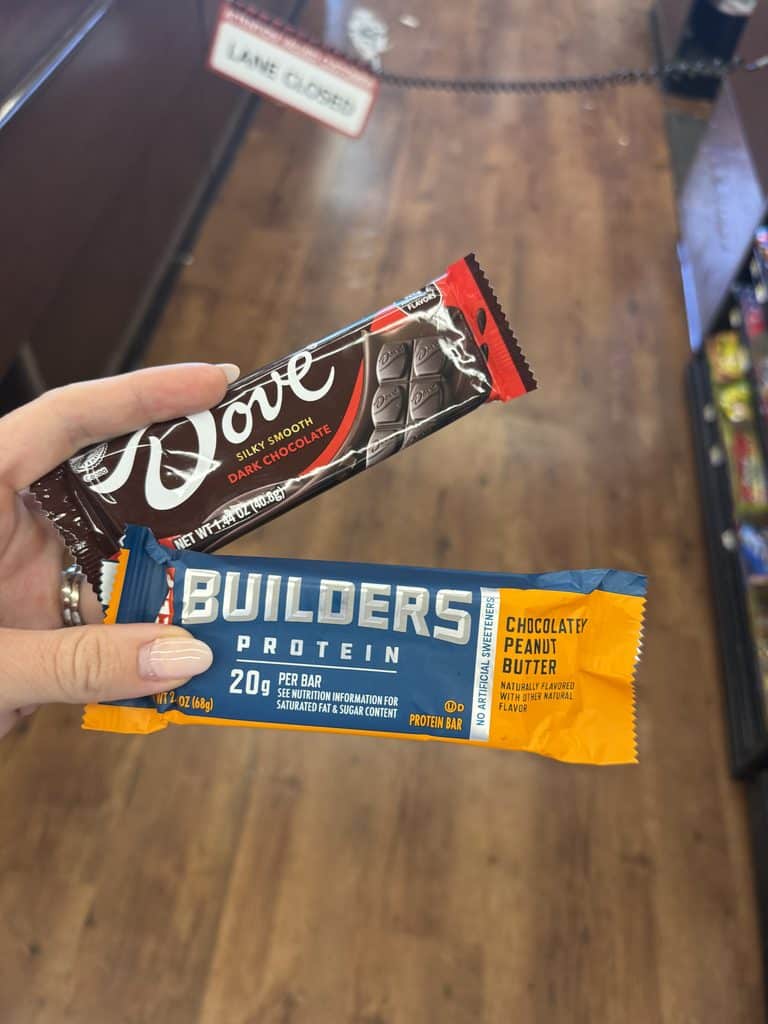
(candy bar vs. protein bar = exact same amount of sugar)
This is where I think we need to zoom out.
If changing your body composition is one of your goals, your body needs a reason to change.
We create that stimulus through exercise and resistance training.
Then we support that work with enough energy and nutrients – including protein, carbohydrates, healthy fats, fiber, vitamins and minerals.
Sleep matters.
Stress matters.
Daily movement matters.
Your overall energy intake matters.
Protein is one piece of the puzzle, but not the entire puzzle.
So what do I actually recommend?
1. Find out where you’re starting.
This is one area where my thinking has evolved.
There was a season of my life when tracking food wasn’t a healthy or helpful tool for me, so I didn’t do it.
Today, I see tracking differently.
For some people, tracking for a short period of time can simply be an awareness tool.
You don’t have to track every bite you eat for the rest of your life.
But seeing what you actually eat for a few days can be really illuminating.
That’s exactly how I discovered that I wasn’t getting as much protein as I thought I was.
Personally, I generally aim for around one gram of protein per pound of my ideal body weight. That’s my target, but not a prescription for every woman.
As a simple starting point, I often encourage women who want to prioritize muscle to see what it looks and feels like to work toward 100+ grams per day, and then adjust based on body size, goals, activity level, health needs and how your body responds.
You may need more. You may need less.
The goal isn’t to hit a perfect number. It’s to learn what supports your body.
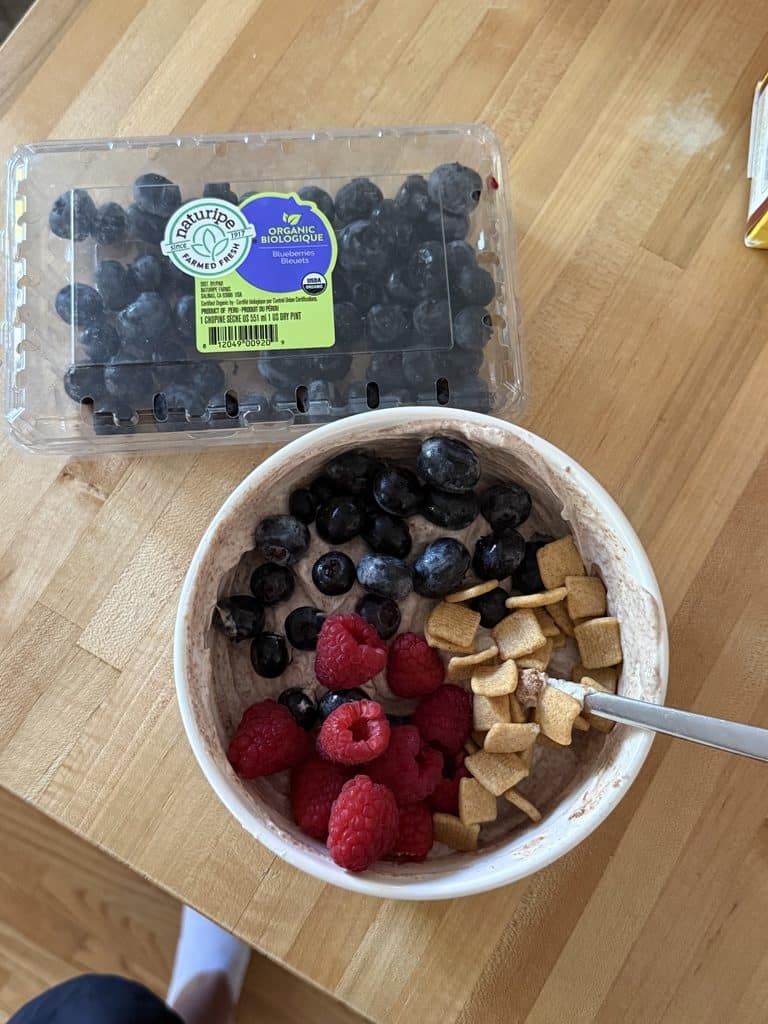
2. Start with breakfast.
If you’re going to change ONE meal, this is where I’d start.
I consider protein at breakfast a must for myself.
Instead of starting the day with mostly carbohydrates and then trying to play protein catch-up at dinner, build your breakfast around a meaningful source of protein.
Research supports protein’s ability to increase short-term fullness and satiety, and studies of higher-protein breakfasts have found benefits for fullness and, in some populations, food cravings.
For me personally, this has made a noticeable difference in how satisfied and steady I feel throughout the morning.
Some of my go-tos:
- Eggs + egg whites
- Greek yogurt
- A smoothie with protein powder
3. Eat whole foods.
Before you buy the protein cereal, protein cookies and protein water, look at the food you’re already eating.
Could you add some grilled chicken to your salad?
Use Greek yogurt instead of a lower-protein option?
Add egg whites to your eggs?
Build dinner around chicken, turkey, beef, fish, beans or another whole-food protein source?
The goal is to focus on whole foods first and then convenience products when you truly need them.
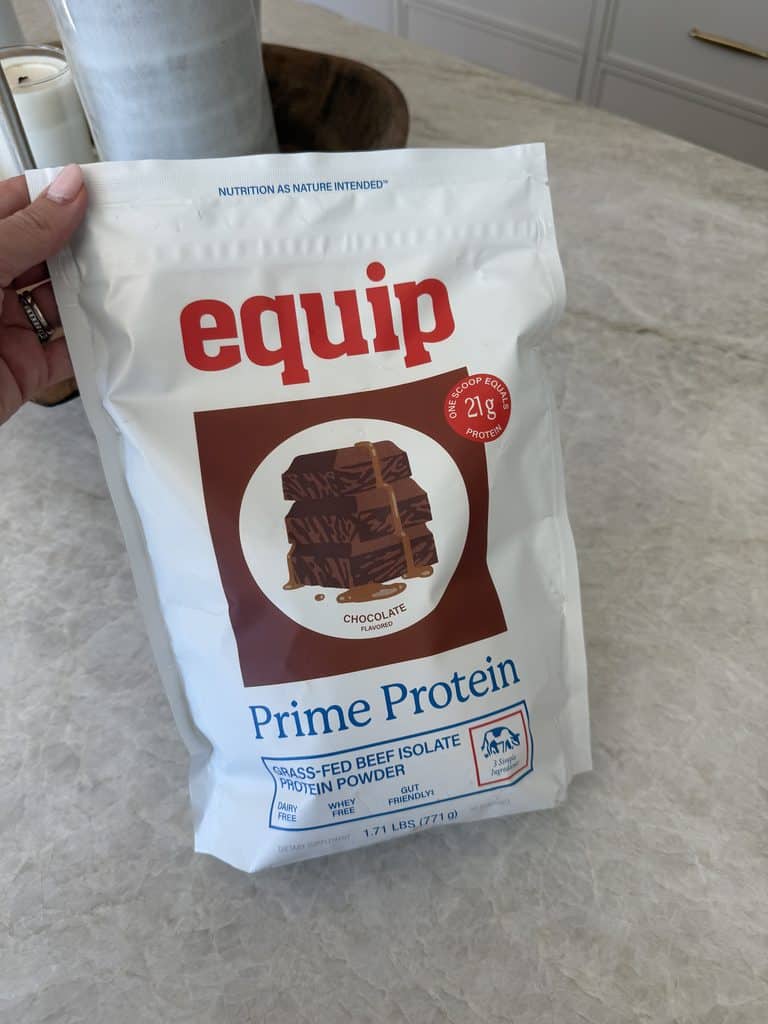
You may be curious about protein powder. I use it often! But focus on high quality ingredients with very few additives.
One of my favorites is Prime Protein by Equip Foods because I like the ingredients and it makes hitting my protein needs easier when I need the help. (You can use code ROBIN for 15% off.)
But protein powder is a tool. It’s not the foundation of my diet.
4. Be careful with the protein-bar trap.
I learned this one personally.
For a while, I got into the habit of grabbing a protein bar when I headed out for kid pickup.
Sounds healthy, right?
Except eventually I realized…I wasn’t actually hungry.
I just liked the chocolatey afternoon treat.
The protein bar had basically become a candy bar that I was mindlessly grabbing every time I ran out the door.
And because I wasn’t hungry, those were calories my body wasn’t necessarily asking for.
I still enjoy the occasional bar, but save them for traveling or times when I’m truly in a pinch.
5. Increase slowly.
One final thing that most people aren’t mentioning:
If you’re currently eating relatively little protein, please don’t go from 50 grams to 140 grams tomorrow.
Your digestive system may have some thoughts about that.
Increase gradually, continue eating plenty of fiber-rich plants, drink enough water and pay attention to how your body responds.
Your body is unique and should be listened to.
And maybe that’s the bigger message I want you to take away from all of this.
Watch out for turning protein into another wellness rule you have to follow perfectly.
Yes, protein matters.
Yes, I think it’s worth paying more attention to.
Yes, adequate protein combined with strength training can be incredibly valuable for maintaining the muscle we want to carry with us for decades to come.
But you do not need protein-fortified versions of every food in your kitchen.
You don’t need to chase the biggest number you see someone eating on Instagram.
And you definitely don’t need to eat a protein bar when you’re not hungry just because it says 20g PROTEIN! across the wrapper.
Learn what your body needs. Build meals around real, nourishing foods. Challenge your muscles. Fuel them well. And remember that wellness advice on the internet is usually not one size fits all.
**If you’re reading this thinking, Okay, but what do I actually EAT? Along with hundreds of Pilates and strength workouts in the Lindywell app, you’ll get simple, nourishing recipes designed to help you build balanced meals without turning food into another full-time job. Start your free trial here and let us help you put all of this into practice.