
For years, I thought the point of exercise was to burn calories.
That was the whole game. Work out enough, burn enough, and eventually my body would finally look the way I wanted it to.
Sound familiar?
If you grew up in the 80s, 90s, or 2000s, this was basically the air we breathed. We were taught to evaluate our workouts by one thing: how many calories did I burn?
It’s why so many of us started exercising in the first place.
And it’s also why, after a workout, we’d check the number on our watch or the screen on the treadmill and let that number decide the success of our workout.
But here’s what I now know after years in the industry:
Calorie burn is not only the wrong metric for measuring a good workout, it’s also not a very effective motivation for exercise in the first place.
Most workouts burn far fewer calories than we think
For a couple of reasons….
Research shows that fitness trackers and calorie estimates are often significantly inaccurate, sometimes overestimating calorie burn by 20 to 90%.
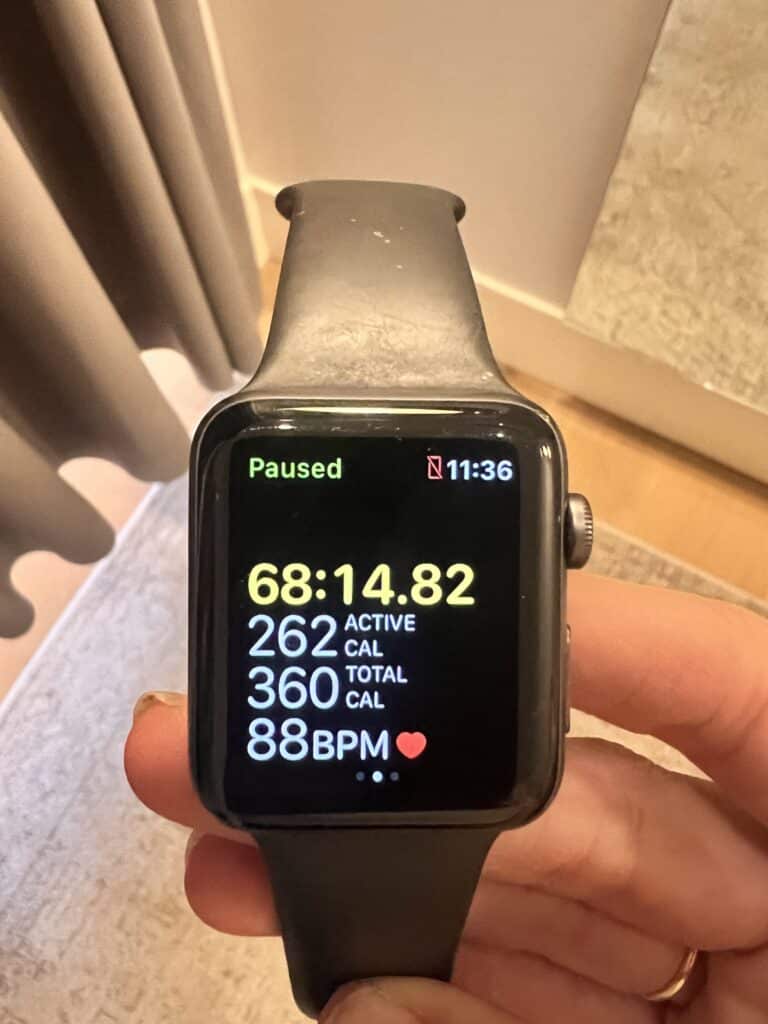
A solid 45-minute workout might register 220 calories on your watch.
But when you compare that to calories you’re burning off, it’s equivalent to something as simple as your morning Starbucks run or a handful of nuts on the way out the door.
This can be discouraging – but it’s also a small and diminishing way to think about exercise – something that is doing so much more for your body.
The calorie math doesn’t add up
When it comes to calorie burn and weight loss, exercise alone was never the lever we were told it was.
The changes most of us are hoping for (how we look, how we feel, how we move, how we age) don’t come from burning more calories in a workout.
We’ve been given a flawed framework and that’s what I want to help clarify.
For decades, women have been sold thinness instead of health.
We’ve been told to focus on getting smaller instead of stronger.
We’ve focused on punishing our bodies instead of partnering with our bodies.
And it has not only not worked, it’s caused confusion and drained the joy out of movement for so many of us.
What exercise is actually for
Exercise is one of the most powerful things you can do for your body and your life. And in ways that go far beyond calorie burn.
When you move your body consistently, you’re building muscle that supports your metabolism as you age.
You’re strengthening your bones, which matters more than most women realize, especially heading into perimenopause and beyond.
You’re regulating your mood, lowering stress, protecting your brain, improving balance, reducing your risk of disease, and building the kind of body that supports you for the long haul.

None of that shows up on a calorie counter.
When you stop measuring workouts by calorie burn alone and start focusing on consistency, strength, energy and overall wellness, you’ll end up with better long-term results.
And not only that, your relationship with movement becomes something you pursue for positive reasons and as a result, becomes something you can actually enjoy and sustain.
Instead of dread or something you have to do to burn off last night’s dinner…
A walk becomes stress relief.
Strength training becomes protection for your future self.
Pilates becomes a way to build real, connected strength for real life.
Movement becomes an act of care instead of punishment.

A simple shift worth trying this week
Instead of asking “how many calories did I burn?” try asking “what did this workout give me?”
Maybe it helped regulate your nervous system.
Maybe it improved your posture.
Maybe it boosted your energy or helped you keep a promise to yourself.
Maybe it simply made you feel more like you.
And if you want to go a little deeper: make a list of every reason you want to exercise that has nothing to do with calorie burn. You may be surprised how long it gets.
At Lindywell, we don’t focus on calorie burn in our workouts and that’s intentional.
Instead, we remind you of what you’re gaining every time you step on your mat: improved mobility, more strength, better circulation, a calmer mind, better balance, and deposits into your future self.
So you can feel strong, connected and confident.
That’s worth so much more than a number on a screen and a much more powerful motivator to keep moving for years to come.
Have a question about exercise, metabolism, or what metrics actually matter? Leave a comment and let me know. My team and I read every response and it just might become a future Wellness Wednesday topic.